
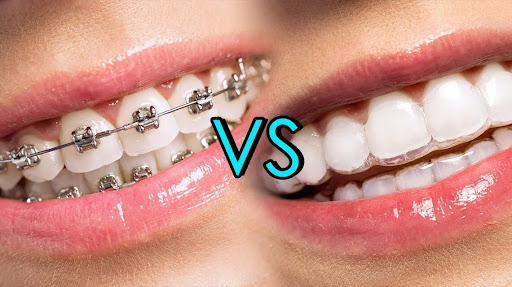
Orthodontic treatment is a long-term investment in oral health, function, and appearance. For many families and adult patients, one of the first questions that comes up is cost. Comparing braces cost vs Invisalign cost helps patients plan financially and understand what they are paying for beyond just straight teeth.
Both options are effective, widely used, and supported by years of clinical research. However, their pricing structures, insurance coverage, and total out-of-pocket expenses can differ depending on individual needs. This guide breaks down how costs compare, what influences pricing, and when one option may be more affordable than the other.
Average Cost Comparison
When looking at the cost of traditional braces vs Invisalign, national averages provide a helpful starting point. These ranges reflect typical treatment fees in the United States but may vary by location and case complexity.
Traditional braces
Metal braces generally range from $3,000 to $7,000. Ceramic braces, which are less noticeable, often fall on the higher end of this range or slightly above it.
Invisalign
Invisalign treatment typically costs between $3,500 and $8,000. Mild cases may be less expensive, while complex bite corrections can approach or exceed the cost of braces.
At a glance, Invisalign often appears more expensive. However, the final cost depends less on the appliance and more on the treatment requirements behind it.
Cost Factors That Influence Treatment Pricing
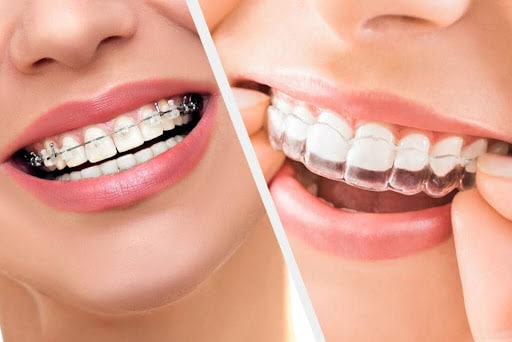
Understanding what goes into orthodontic fees makes the braces cost vs Invisalign cost comparison clearer.
Complexity of the case
Crowding, spacing, bite alignment, and jaw positioning all affect cost. More complex cases require longer treatment times and more adjustments, regardless of appliance type.
Length of treatment
Shorter treatments usually cost less. A 12-month Invisalign case may be more affordable than braces worn for 24 months, depending on the plan.
Provider expertise
Orthodontists with advanced training and extensive experience may charge higher fees, reflecting their skill and oversight throughout treatment.
Technology and materials
Invisalign includes custom aligners created through digital scans and proprietary manufacturing. Braces involve physical components and regular in-office adjustments.
Geographic location
Treatment costs can vary between cities and regions. Fees in larger metro areas may differ from those in suburban or smaller communities
Braces vs Invisalign Cost With Insurance
Insurance coverage plays a major role when comparing braces vs Invisalign cost with insurance.
Most dental insurance plans that include orthodontic benefits cover traditional braces more consistently. Coverage often applies to children and teens, though some plans include adult orthodontics as well.
Invisalign coverage has become more common, but not all plans treat it the same as braces. Some policies categorize Invisalign as an alternative or cosmetic option, resulting in partial coverage or exclusions.
Key points to understand:
- Orthodontic coverage usually has a lifetime maximum, often between $1,000 and $2,500.
- Coverage may apply equally to braces and Invisalign, depending on the plan.
- Pre-authorization is often required before treatment begins.
Reviewing your insurance policy carefully helps clarify how much of the total cost may be covered.
Invisalign vs Braces Cost Without Insurance
Without insurance, the Invisalign vs braces cost without insurance comparison becomes more straightforward.
In many cases:
- Metal braces remain the lower-cost option.
- Invisalign may cost more due to lab fees and aligner production.
- Payment plans can make either option more manageable over time.
Orthodontic practices often offer monthly payment plans, regardless of treatment type. This spreads costs evenly over the course of care, making upfront differences less impactful for many families.
Braces Treatment: Cost-Related Pros and Cons
Advantages from a cost perspective
- Often, a lower base price
- Widely covered by insurance.
- Effective for complex cases without added fees
Potential drawbacks
- More frequent in-office visits
- Repairs or replacements may add cost if appliances break.
- Ceramic options can increase overall fees.
For patients with significant alignment or bite issues, braces treatment can provide predictable results without escalating costs.
Invisalign Treatment: Cost-Related Pros and Cons
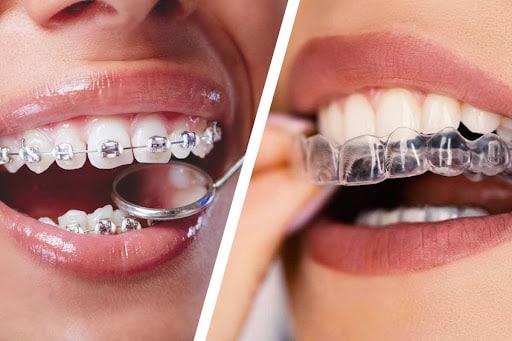
Advantages from a cost perspective
- Digital planning may reduce unexpected adjustments.
- Often fewer emergency visits
- Removable aligners simplify oral hygiene.
Potential drawbacks
- Higher initial cost for some cases
- Insurance coverage may be limited.
- Replacement aligners can increase expenses if lost.
Invisalign treatment may be more cost-effective for mild to moderate cases that can be completed efficiently.
Beyond Cost: Other Factors to Consider
While comparing braces cost vs Invisalign cost is important, affordability also relates to comfort, lifestyle, and compliance.
Appearance
Invisalign aligners are clear and less noticeable. Braces are more visible, though ceramic options reduce this concern.
Comfort
Aligners tend to cause less irritation, while braces may involve pressure or soreness after adjustments.
Lifestyle and maintenance
Braces stay in place and do not rely on patient compliance. Invisalign requires wearing aligners 20–22 hours per day to stay on schedule.
These factors do not change the base cost but can influence how patients perceive overall value.
Expert Perspective on Orthodontic Cost Decisions
From a clinical standpoint, cost should never outweigh suitability. According to Dr. Maryam Ghorbani, DDS, pediatric dentistry often emphasizes early assessment. Early orthodontic planning can sometimes reduce future treatment length and overall expense.
Similarly, Dr. Atoosa Nikaeen, an orthodontist practicing in Southern California, notes that treatment efficiency matters as much as appliance choice. Selecting the right option for a patient’s needs can prevent extended treatment times that increase total cost.
Their shared perspective highlights that affordability is not just about the appliance, but about achieving results efficiently and effectively.
Areas We Serve and Regional Cost Considerations
Orthodontic costs can vary slightly based on the local market and provider approach. Patients in Calabasas, West Hills, CA, Woodland Hills, Winnetka, and Canoga Park often encounter similar pricing ranges, though treatment fees ultimately depend on individual case needs. At Super Kiddos Dental & Orthodontics, local consultations help families understand how regional factors, treatment complexity, and insurance benefits shape overall orthodontic costs.
Which Option Is More Affordable?
When weighing braces cost vs Invisalign cost, affordability depends on more than just the treatment type. Traditional braces often come with lower base pricing and broader insurance coverage, while Invisalign can be similarly priced for mild cases or when insurance benefits apply equally. Treatment complexity, duration, and coverage limits all influence the final out-of-pocket cost.
Rather than focusing on national averages alone, families benefit most from understanding how these variables apply to their specific situation. A consultation with Super Kiddos Dental & Orthodontics can provide clarity on expected costs, coverage considerations, and treatment suitability, helping patients make decisions that balance both financial planning and long-term orthodontic outcomes.